Massachusetts rule charging juveniles with first-degree murder as adults
Defending JacobThe Massachusetts rule charging juveniles with first-degree murder as adults requires a child of Jacob Barber’s age who is charged with first-degree murder to be charged as an adult. The rule shapes both the case’s legal stakes and the way Jacob’s attorney addresses him: adult treatment entails personal agency, but it also places a juvenile inside the adult criminal process.
Legal Treatment and the Defendant’s Agency
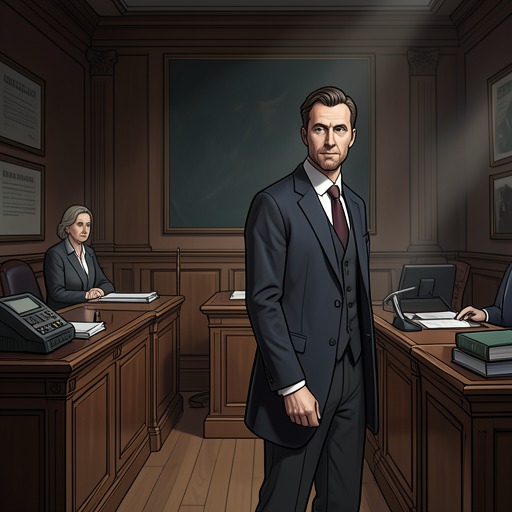
When Jonathan Klein explains the arrangement to Jacob, he emphasizes that Jacob is the client and, as far as possible, the decision-maker. His parents and lawyers may advise him, but the case belongs to him; nothing should happen without his agreement. Klein links that promise directly to Massachusetts law: because a child Jacob’s age charged with first-degree murder is charged as an adult, he intends to treat Jacob as one too. Jacob gives only a brief acknowledgment, and the exchange makes the rule more than a charging label: it frames the young defendant as someone with a say in decisions about his own case.
That recognition of agency exists alongside the stark imbalance of the situation. Jacob is a school-age defendant facing a first-degree murder prosecution, while the law assigns him adult status in the case. Klein’s explanation acknowledges the rule as consequential for better or worse, without suggesting that adult charging makes Jacob an adult in every other respect.
The Rule Within an Uncertain Case
The prosecution and defense both work to make incomplete information intelligible through competing accounts. In testimony, a witness describes how investigators can settle on a suspect and then seek evidence that confirms their theory, overlooking leads pointing elsewhere; Leonard Patz is raised as an example of an alternative suspect. Andrew Barber likewise reflects that a defense based only on weaknesses in the prosecution’s proof may not satisfy jurors, who may want an alternative account of who committed the crime. The rule establishes the adult legal forum for Jacob, but it does not resolve the underlying uncertainty or determine which account is true.
The prosecution, too, presents the case as a story. Neal Logiudice characterizes Jacob as a boy with a lethal temper who finally snapped, and Andrew observes how deliberately Logiudice reduces the case to a memorable phrase for the jury. In another exchange, the prosecution points to the detailed description of the knife wounds in Jacob’s online story, including an angle investigators regarded as nonpublic information, as a basis for probable cause. The contrast between narrative certainty and contested evidence underscores that adult charging determines how Jacob is prosecuted, not whether the prosecution’s interpretation is correct.
Family and Community Consequences
The rule’s reach is felt beyond the courtroom. Dan Rifkin tells Andrew that the uncertainty is draining and that resolution, with the person responsible locked away, would bring relief to his family. His plea shows the human pressure gathered around a prosecution: the legal process is asked to provide certainty and closure even while the facts remain contested.
When the Barber and Rifkin families encounter one another at a market, the scene compresses their conflict into a painful imbalance: three people are present with Jacob, while the Rifkins have lost their son. Andrew recognizes how Jacob’s continued existence could appear profane to them. Adult prosecution does not repair that loss or make the two families’ experiences commensurable; a verdict or dismissal can change the case’s legal status without undoing the grief and hostility surrounding it.
Dismissal and the Limits of Legal Resolution
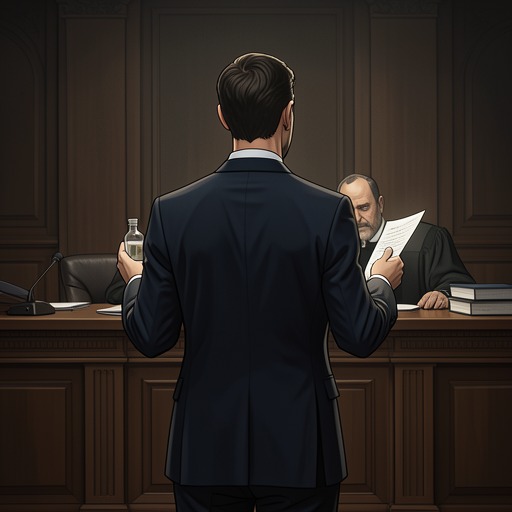
After Leonard Patz’s confession becomes known, Andrew and Laurie experience Jacob’s impending release as a kind of rescue and believe the new development has established his innocence. Before the judge takes the bench, the prosecution files a nolle prosequi, dropping the charges; the judge then tells Jacob he is free. The episode demonstrates that adult prosecution does not guarantee a trial or conviction: the government can abandon the case when circumstances change.
Legal release, however, does not restore the families to a shared sense of safety. After the charges are dropped, Dan Rifkin approaches the Barbers with a kitchen knife, but Father O’Leary intervenes and disarms him before he reaches them. The juxtaposition of dismissal and renewed danger makes the rule’s limits plain. It governs how a juvenile charged with first-degree murder enters the criminal process; it cannot itself settle grief, establish lasting trust, or prevent private retaliation.